Thank You for Attending
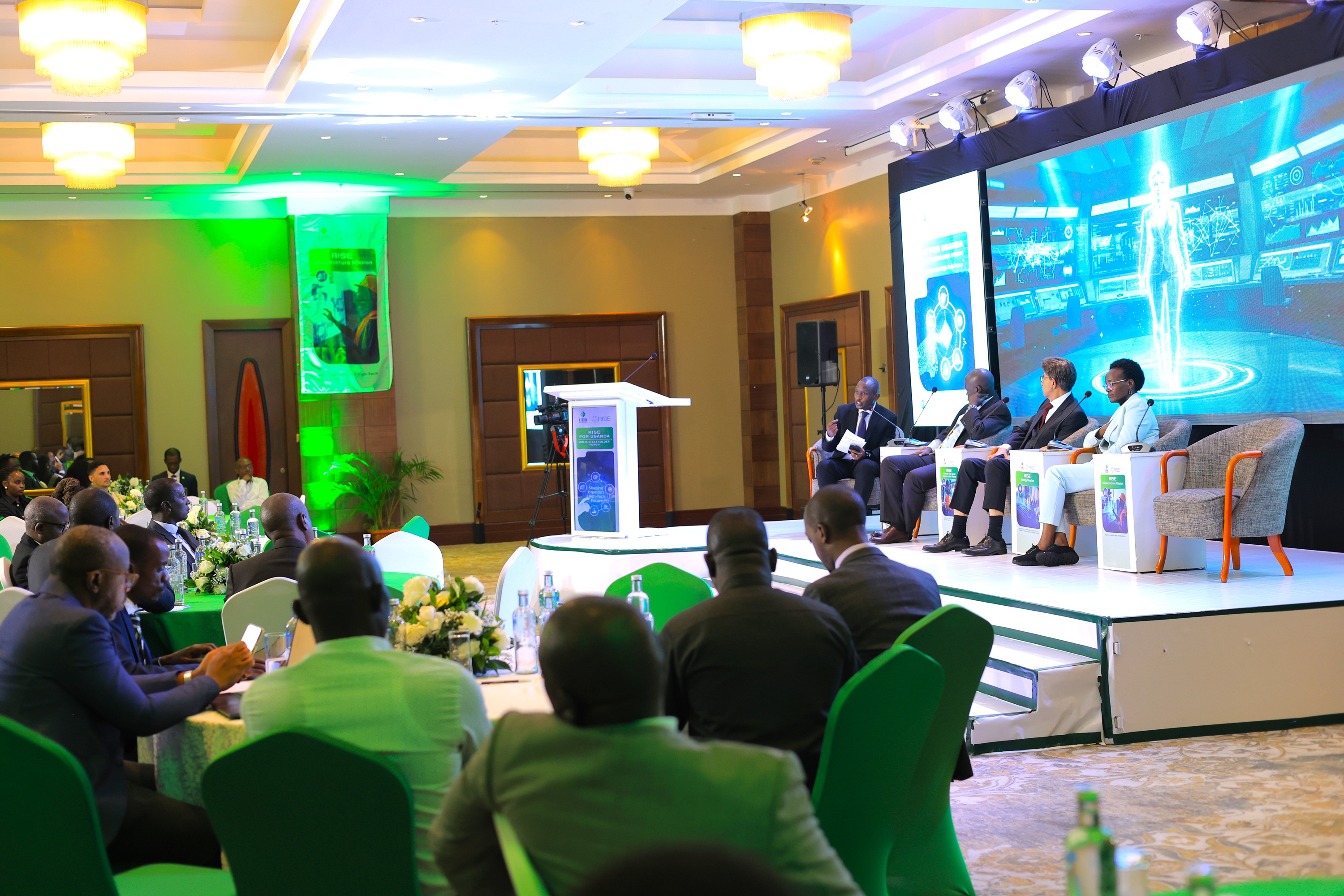
RISE FOR UGANDA MULTI-STAKEHOLDERS FORUM: Shaping Uganda’s High-Tech Future.
On behalf of Uganda Development Bank, we extend our heartfelt gratitude for your participation and insightful contributions during the RISE FOR UGANDA MULTI-STAKEHOLDERS FORUM.
It was a pleasure to host foremost government, regulatory authorities, financial institutions, development partners, industry, academia, and the innovation ecosystem from across the country at the Sheraton Kampala Hotel. Your engagement and participation made this Forum a great success.
A massive thank you to our visionary speakers who shared their invaluable insights and ignited critical discussions in the different missions.
Their insights were central to the Forum's success.
“Imagine a Uganda where locally developed AI diagnostic systems scan patient data and medical images within seconds, supporting doctors to detect malaria complications and heart disease early. Rural clinics deliver world-class diagnostics, reducing mortality, and Uganda becomes a regional exporter of HealthTech, built entirely by Ugandan engineers using domestic technology.”
“Envision smart mineral processing plants in Western Uganda, transforming raw minerals into high-purity industrial inputs for batteries and electronics. Automated sorting, precision refining, and real-time analytics optimize production. Engineers monitor digital dashboards to maximize efficiency and minimize waste — all technology designed and operated locally. Uganda emerges as a hub for advanced industrial technology.”
“While we talk about tenfold growth, it is critical to emphasize that growth is not just about numbers; it must be quality and sustainable. Anchoring Uganda’s growth on ATMs, agro-industrialization, tourism, mineral development, science, technology and innovation, and the creative industry ensures that we are purposeful in our approach. Each of these areas is supported by ICT, reinforcing that our growth strategy is informed by data and technology. As we move forward, Uganda Development Bank (UDB) has a key role in identifying the projects that align with this strategy, ensuring that the investments made are not just consumptive, but truly productive and sustainable. This approach demonstrates our commitment to growth that is measurable, purposeful, and resilient.”
“Technology sovereignty is central to our national strategy, and the Buy Uganda, Build Uganda policy is designed to protect our young innovators and promote solutions that are homegrown. By prioritizing local technology, we ensure that challenges such as traffic management and e-waste handling become opportunities for innovation and practical solutions. Uganda Development Bank (UDB) has the opportunity to guide the financing of projects that support this intentional growth, ensuring that we are building systems that are designed for the Ugandan context. We must move away from a lamentation mentality and recognize that these challenges are in fact entry points for creative problem-solving that drives economic development, local empowerment, and sustainable industry growth.”
“The government recognizes that artificial intelligence can only be realized when underpinned by structured, harmonized data. Our National Data Strategy has been carefully designed to ensure all government systems can communicate and share information efficiently, avoiding duplication and waste. This strategy lays the groundwork for the AI strategies we are developing, creating a foundation for Uganda to leverage technology effectively. Uganda Development Bank (UDB) and other stakeholders are encouraged to utilize this harmonized data to make informed investment decisions, ensuring that all projects and initiatives are aligned with national priorities. By integrating systems and standardizing data, we can realize the true potential of technology in driving Uganda’s economic transformation.”
“To implement our objectives for tenfold growth, the government has launched the National Digital Transformation Programme, a five-year strategy running from 2023 to 2028. This programme prioritizes nationwide broadband coverage of 90% to enable high-tech industrialization in all regions of the country. We aim to move 95% of government services online through the Government Digital Registry, reducing the cost of doing business and increasing accessibility. Digital skilling is emphasized from the grassroots level to innovators, ensuring that farmers, entrepreneurs, and young people are capable of leveraging technology for productivity. We are also localizing technology to reflect Uganda’s 52 languages, enabling every citizen to access information in their language. Uganda Development Bank (UDB) plays a pivotal role in financing and supporting these initiatives, ensuring that growth is inclusive, accessible, and technology driven.”
“Growth cannot be achieved by government alone; it requires collaboration across government, private sector, academia, media, and development partners. Development finance institutions such as Uganda Development Bank (UDB) are essential in catalyzing this growth through patient capital, sustainability-aligned financing, and disciplined portfolio management. The RISE initiative provides a structured platform where policy direction, capital allocation, and innovation come together to create scalable, investable, and climate-aligned industrial systems. By moving from applications to integrated systems, RISE ensures that technology solutions generate value and can operate at scale, building a shared national digital infrastructure and supporting the rise of high-tech industries as agents of national growth.”
“Uganda’s tenfold growth strategy is not a dream; it is a calculated and deliberate roadmap. By aligning the RISE technology systems mission with the ATMs framework and the national digital transformation roadmap, Uganda positions itself as a builder of high-value technology systems rather than just a consumer. This approach creates opportunities for employment, supports sustainable industrial systems, and strengthens the foundation of our economy. Uganda Development Bank (UDB) remains a critical partner in this transformation, providing financing and guidance that ensures our projects are impactful, scalable, and sustainable. The next phase of Uganda’s growth will be defined not just by the technologies we adopt, but by how effectively we reshape industries to create meaningful, lasting development for our people.”
“Industrialization is central to Uganda’s development strategy. Our goal is to create jobs, generate wealth, and leverage the country’s comparative advantages. Uganda is rich in raw materials and has a youthful population ready to drive economic transformation.
To achieve this, we are reducing production costs, organizing industries, and ensuring production happens in designated zones. The focus is on developing industrial parks that provide the necessary infrastructure to attract investments and create jobs.”
“Technology has transformed every aspect of our lives, from how we communicate to how we learn, work, and innovate. The pace of change is relentless, and if Uganda fails to embrace it, we risk remaining behind. From the steam engine to electricity, from telephones to AI-driven innovations, each leap has increased productivity and expanded human potential. Today, we stand on the edge of a revolution: the AI-driven disruptive innovation economy is projected to contribute 210 trillion USD globally by 2030, while traditional sectors shrink. Uganda has a precious advantage, its youth, who make up 76% of the population. With strategic investment, support from institutions like UDB, and a bold commitment to digital literacy, we can empower this generation to take part in global innovation, productivity growth, and economic transformation. The opportunity is real, and the time to act is now.”
“If we want agri-food projects to become truly bankable and scalable, we must invest in shared infrastructure that reduces loss, improves quality, and strengthens cash flows.
One practical solution is affordable, shared solar-powered cold chain infrastructure. There is proven success across Africa. In Nigeria, solar-powered walk-in cold rooms placed at markets — where farmers pay per crate, per day, have preserved millions of metric tonnes of food, created jobs, and operated without diesel dependency."
“We are talking about multidisciplinary fabrication here. So if I am an agriculturalist, I need smart technologies, I need Artificial Intelligence like Sera, I need an economist to be on board to say, does it bring returns on investment and so on.
So we have research teams aligned around doing the fabrication, operating the fabrication labs to develop those technologies. Once these technologies are developed, we are striving to make sure that they are demonstrated.”